Credit report errors are not just clerical annoyances. They can raise borrowing costs, block approvals, and distort how lenders, landlords, and insurers judge risk. That matters because FTC and Consumer Reports findings suggest errors are common, with many consumers finding mistakes that can affect terms or access to credit. The core problem credit disputes solve is simple: they replace inaccurate risk signals with verifiable facts.
What credit report errors should you dispute first?
Start with high-impact inaccuracies. Equifax and Experian entries showing collections, charge-offs, late payments, or unfamiliar accounts deserve first attention because they can affect both score models and lender underwriting.
Not every mistake carries the same weight. A misspelled former address may matter for identity matching, but a falsely reported 60-day late payment or a duplicate collection can cost far more in approval odds and pricing. If you need a mortgage, auto loan, or apartment soon, prioritize errors that change payment history, balances, status, or ownership.
The fastest way to triage is to group errors by likely damage:
- Unfamiliar accounts: possible identity theft, mixed file, or unauthorized use
- Wrong late payments: current account shown delinquent or forbearance misreported
- Duplicate derogatories: same debt listed twice, often after collection transfers
- Outdated status: paid, settled, or closed account still reported as open or unpaid
- Wrong balances or limits: utilization distortion that can depress scores
Common misconception: disputing everything at once is always best. In practice, targeted disputes with strong documentation often work better than a stack of weak claims.
How common are credit report errors, and do they really matter?
Yes, they matter. FTC and Consumer Reports data show errors are frequent enough to justify routine checks, and even one inaccurate derogatory line can change rates, approvals, or deposits.
The FTC found 1 in 5 consumers had an error on at least one of their three reports, and about 5% had errors serious enough to produce less favorable credit terms. Consumer Reports later found 34% of participants identified at least one mistake, with about 29% finding personal information errors and 11% spotting accounts they did not recognize.
The financial effect is not theoretical. The FTC also reported that many consumers who disputed errors saw their reports change, and some saw credit score gains of 25 points or more. If a correction moves a file from a borderline tier into a stronger one, then pricing can improve quickly. On large loans, even a 0.25% to 0.50% rate shift can mean thousands of dollars over time.
Pro tip: a “small” identity mismatch is not always small. Wrong names, addresses, or birthdate fragments can point to a mixed file, where another person’s account data attaches to your report.
What credit repair services are commonly compared for dispute help?
Several options exist. Clean Credit Clinic, Lexington Law, and DIY bureau disputes represent different mixes of speed, support, and cost control.
The right fit depends on your file complexity, time pressure, and tolerance for paperwork. Some consumers need only a one-time dispute letter. Others need ongoing monitoring, identity alerts, rebuilding advice, and structured follow-up across all three bureaus.
- Clean Credit Clinic: A guided option for consumers who want report analysis, bureau and creditor disputes, one-on-one specialist support, 24/7 phone, text, and email access, and a secure portal for tracking progress. It also combines dispute help with rebuilding tools like starter cards and optimization strategies.
- Lexington Law: A widely recognized market example often compared for ongoing dispute assistance and educational resources. Fit depends on service structure, communication preferences, and budget.
- Credit Saint: Another benchmark consumers review when comparing dispute-focused plans, escalation options, and ongoing service models.
- DIY direct disputes: Lowest out-of-pocket cost if your errors are simple and documentation is strong. The trade-off is time, organization, and the need to track deadlines yourself.
If your file includes multiple bureaus, several derogatories, or identity-theft indicators, support infrastructure can matter as much as price.
How do you audit all three credit reports step by step?
Audit all three reports line by line. AnnualCreditReport.com, Equifax, Experian, and TransUnion can show different data, and a dispute strategy is weaker if you review only one file.
Step 1: Pull fresh reports from all three bureaus and compare the same account across each report. A collection may appear on TransUnion but not Equifax, or a balance may differ between Experian and the others. Mark every mismatch.
Step 2: Separate header data from tradeline data. Header data includes name variations, addresses, Social Security fragments, and employment details. Tradeline data includes account status, payment history, credit limit, balance, date opened, and whether the account belongs to you.
Step 3: Prioritize by impact and proof. If you have statements, settlement letters, canceled checks, or lender emails that directly contradict the report, move those items to the top. If you suspect identity theft, freeze reports and document it before sending routine disputes.
Pro tip: do not rely only on a score-monitoring summary. You need the full tradeline details and payment grids to catch duplicate or misdated reporting.
Should you dispute with the credit bureau, the creditor, or both?
Usually both. Equifax or TransUnion can correct report-level errors, while the furnisher, often the bank or collector, controls the source data that feeds the bureaus.
A bureau dispute is useful when the report itself is wrong, incomplete, duplicated, or mixed with another consumer’s file. A furnisher dispute is useful when the lender or collector is reporting incorrect status, dates, balances, or payment history from its own system.
Here is the practical trade-off. Bureau disputes are central because the Fair Credit Reporting Act requires reinvestigation and communication of results. Creditor disputes matter because if the source keeps sending the same bad data, the item can reappear or remain “verified.” If the error comes from a wrong payment posting or a settlement not coded correctly, then the furnisher often has the fastest path to a real correction.
If you want the strongest paper trail, dispute each affected bureau and the furnisher separately. That increases the chance that at least one investigation reaches the root of the problem.
How do you write a dispute that gets a real investigation?
Keep it factual and specific. FTC-style dispute letters that identify one exact error, one account, and supporting proof are stronger than vague complaints sent to Experian or a creditor.
Step 1: Name the account and the exact field that is wrong. Say “Account ending 4421 is reporting 90 days late in May 2024, but the attached statement shows payment posted on May 12, 2024.”
Step 2: Attach copies that prove the correction. Good examples include account statements, payoff letters, settlement confirmations, police reports, identity theft reports, bankruptcy discharge papers, and ID plus address proof when the file may be mixed.
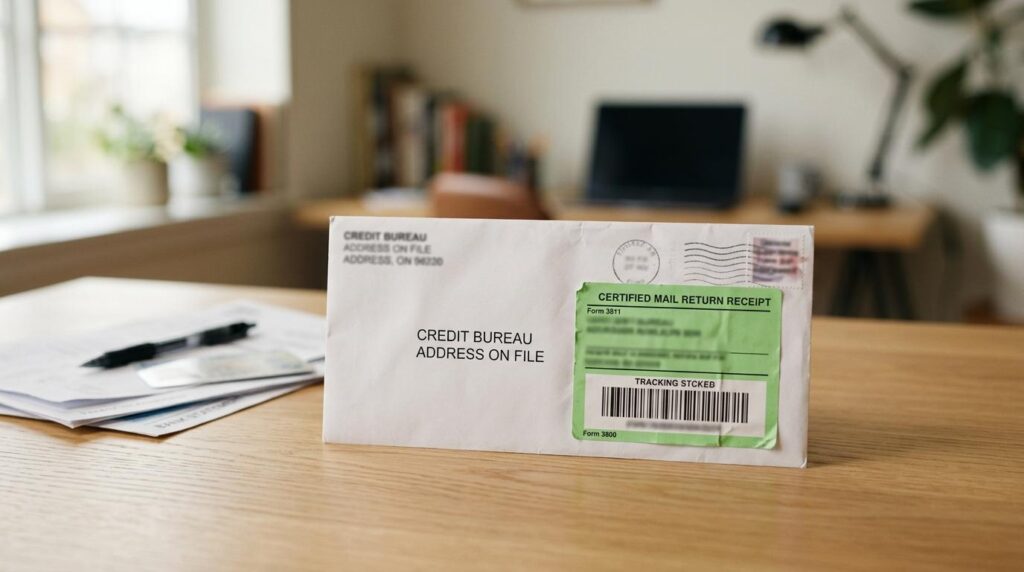
Step 3: Send the dispute in a way you can track. Online portals are faster, but certified mail creates a better paper trail. If timing is critical, some consumers use both: online for speed, mail for documentation.
Common misconception: a longer, angrier letter is more persuasive. It usually is not. Short, documented, error-specific letters are easier to investigate and harder to dismiss as “frivolous” or unsupported.
Which errors hurt your score the most compared with minor mismatches?
Payment history and utilization errors usually hit hardest. FICO and VantageScore give more weight to delinquencies, collections, charge-offs, and revolving balances than to address typos alone.
A false 30-day late, collection, repossession, or charge-off can move a file into a riskier category fast. Wrong balances or limits can also sting because they distort utilization, especially on credit cards. If a $1,000 limit is incorrectly reported as $500, then your utilization doubles on paper, even if your spending did not change.
By contrast, some header errors may not change the score directly but can still damage outcomes. A wrong name variant or address can trigger identity matching issues, manual underwriting concern, or a mixed file. Public record mistakes, including bankruptcies that do not belong to you, are also severe.
Pro tip: score impact and underwriting impact are not identical. Some lenders manually review reports, so even a non-scoring error can cause denials or extra documentation requests.
What documents should you send with a credit report dispute?
Send documents that match the exact error. Bank statements, payoff letters, and an FTC identity theft report carry more weight than a general explanation with no proof.
The key is relevance. One strong exhibit beats ten unrelated pages. If the error is “paid account still shows open and past due,” attach the payoff or settlement letter and the final zero-balance statement. If the error is “not mine,” attach identity documents and fraud documentation.
Useful evidence often includes:
- Government ID and current utility bill
- Monthly statements showing paid or current status
- Settlement letter or zero-balance confirmation
- FTC identity theft report or police report
- Court order, bankruptcy discharge, or creditor email confirmation
Use copies, not originals. Label each document so the investigator can connect it to the account quickly. Highlight the date, amount, and account number that prove your point.
What timeline should you expect after you file a dispute?
Expect action within weeks, not days. Under FCRA rules, bureaus like Equifax generally must forward your dispute promptly and finish the investigation within about 30 days.
Once filed, the process follows a fairly standard path. The bureau logs the dispute, forwards it to the data furnisher, collects the response, and then issues results. If the furnisher cannot verify the information, the bureau must correct or delete it.
A useful timeline looks like this:
- Day 1 to 5: dispute is received and forwarded to the furnisher
- Day 6 to 30: furnisher reviews records and responds with verification, correction, or deletion
- After completion: updated results are sent and the file should reflect the outcome
If the item comes back verified and you still have evidence, ask for the method of verification, send a new dispute with stronger documents, and consider a CFPB complaint. If a deadline matters, keep copies of everything and note delivery dates.
Can correcting errors really improve approval odds and interest rates?
Yes, especially near credit tier cutoffs. Experian and FICO-based lending standards show that even modest score improvements can affect rate offers, credit limits, and approval confidence.
A score change does not guarantee approval, since lenders also review income, debt-to-income ratio, reserves, and recent inquiries. Still, better data gives every other factor a fairer starting point. If a mistaken collection is deleted or a false late payment is corrected, then the borrower may move from a riskier band to a more acceptable one.
The FTC reported that some consumers gained 25 or more points after disputes, and accepted industry estimates often place many successful cleanups in the 20 to 60 point range. That range is meaningful. On auto and mortgage lending, crossing a tier boundary can lower the interest rate, reduce required down payment, or improve approval odds.
Common misconception: disputes themselves hurt your score. They do not. Only the underlying data changes, and when inaccurate negative information is removed or corrected, the result is often favorable.
When should you handle disputes yourself and when should you get professional help?
DIY works for simple errors. Clean Credit Clinic and similar services make more sense when reports involve multiple bureaus, identity theft, repeated verifications, or a deadline like a home purchase.
Handle it yourself if you have one or two obvious mistakes, clear evidence, and enough time to manage follow-up. Many consumers can correct a wrong address, a closed account still marked open, or a single misreported late payment without outside help.
Professional help becomes more valuable when the file is layered. If the report contains duplicate collections, mixed-file indicators, unfamiliar accounts, or negative items verified despite contrary documents, then the real job is no longer just writing one letter. It is tracking three bureaus, multiple furnishers, deadlines, responses, and rebuilding steps at the same time.
That is where structure matters. A service that combines report analysis, dispute drafting, creditor outreach, monitoring alerts, specialist guidance, and a secure portal can reduce delays and missed follow-up. The trade-off is cost, so the decision should match the complexity and urgency of your case.